
It’s that time of year again, when the seed catalogs start to arrive and the dreams of lush gardens seem so close, yet so far away. Planning a garden can be just as much fun as doing the actual work, but it is important to select seeds carefully, especially for Flagstaff gardens. Given our high elevation climate full of extremes, seeds that were harvested in Missouri might not perform as well when faced with our blazing sun and chilly nights. The concept of where a seed or plant comes from is known as ‘plant provenance’ and it is the first thing I consider when purchasing plants and seeds.
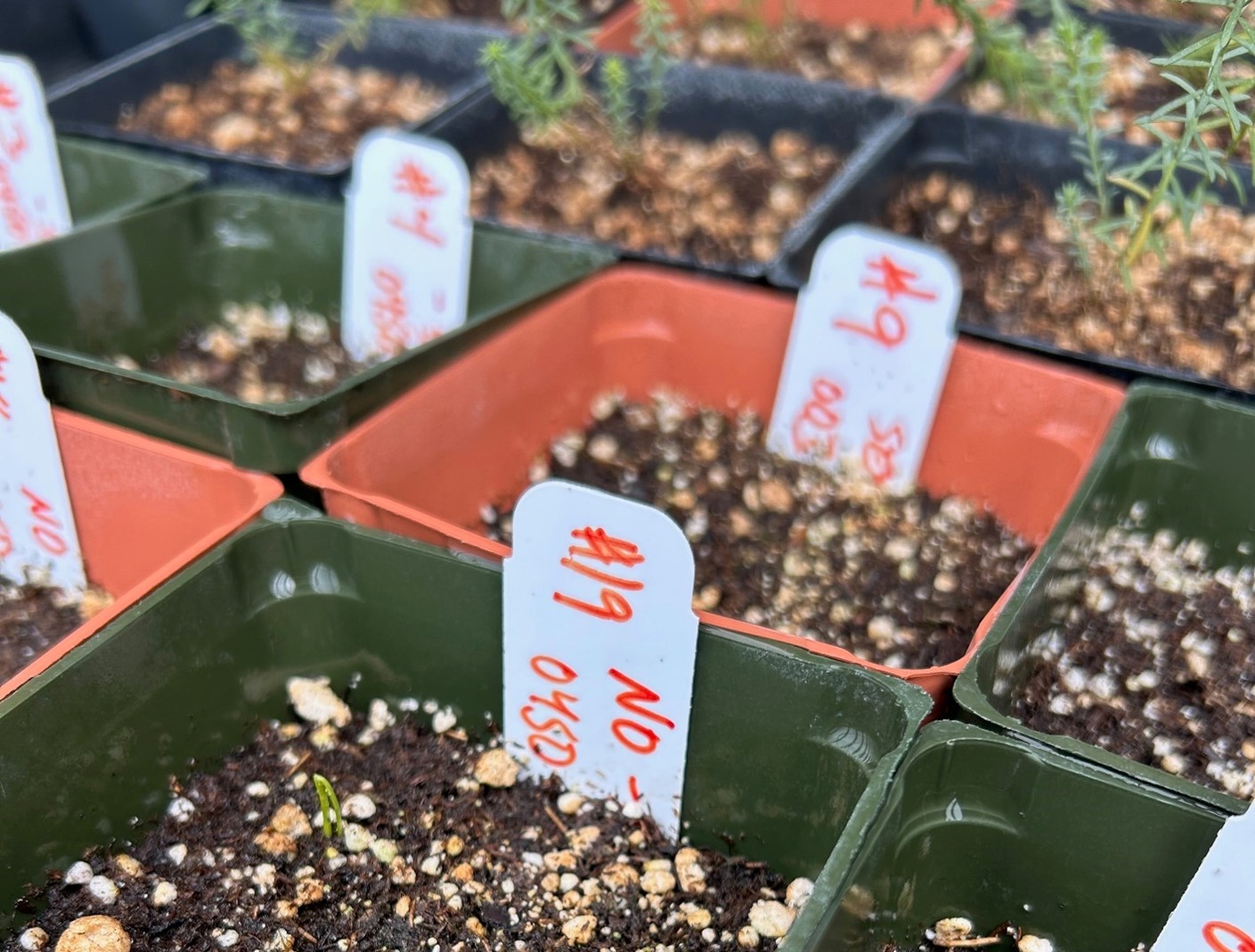
Here at the Arb, we try to collect as much seed as possible to grow in our greenhouses because those seeds are most likely to grow to their fullest, given they have adapted to our climate (hence why plant provenance is important!) While many seeds are collected, there are still some holes to fill to offer a wide selection in our retail nursery and to have an exciting vegetable garden. Unfortunately, the availability of high elevation adapted seeds is not necessarily abundant, but there are a few sources I will share below. Before that, however, there is one more thing to ruminate.
While USDA zones are a great thing to consider when shopping for seeds from other locations, it is important to keep in mind that being a plant in Flagstaff is simply different than being a plant in Springfield, Illinois, and yet both locations have the same USDA hardiness zone. Also consider the fact that there are many native plants with significant ranges that cover over half of the United States. For example, Gaillardia aristata, also known as blanket flower, is native in both Flagstaff and Springfield and yet a blanket flower seed from Springfield will have different DNA than a blanket flower seed from Flagstaff. That resilient, location-specific DNA takes many lifetimes to generate, which is why starting with plants that have the tough Flagstaff DNA is a huge advantage to the home gardener (again, the importance of plant provenance!)
In any case, the catalogs are available and the fire is crackling, so where am I shopping for seeds? Below are a few excellent sources:
Flagstaff CSA (https://www.flagcsa.com)
While you can’t seed shop by the fire for this one, our local CSA has locally grown seed from Lily of the Field and Elevated Gardening, both excellent local growers.
High Desert Seed + Gardens (https://highdesertseed.com)
Based in Colorado, these high elevation seeds grown in the four corners region have performed quite well here at the Arb’s vegetable garden.
Grand Prismatic Seed (https://www.grandprismaticseed.com)
Natural dyers can drool over this excellent selection of dye plants and many other natives and edibles. This small operation is based in the high deserts of Northern Utah, and I can’t recommend their coreopsis varieties enough!
Western Native Seed (https://www.westernnativeseed.com)
An outstanding source for native perennials.
Baker Creek (https://www.rareseeds.com)
While this is my favorite physical catalog to flip through, caution must be taken for Flagstaff gardeners as many seeds offered won’t perform quite as well as they do in their Missouri gardens. They do have some excellent heirlooms and short season varieties that have done quite well in our vegetable garden. The beautiful images make for great collaging too!
Looking to start with locally grown plants rather than seeds? Check out our retail nursery, open May 1st 2026!
Gina Goegan is the Greenhouse Manager at The Arboretum