Anyone who has ever heard me talk about vegetable gardening at the Arboretum has heard me explain, or rather complain, about the huge temperature swings we have throughout the growing season. Not only is a summer freeze inevitable in our beautiful meadow, aka “cold sink” site, but the intensity of the high elevation, peak summer sun makes it almost impossible for tender edible plants like squash, beans, and tomatoes to survive. Having a thriving vegetable garden at the Arboretum has been quite a challenge to say the least. This year was different thanks to our friends at Steady Harvest.
With grant assistance through the Flagstaff Sustainability Office, we were able to purchase two MiniTunnels from Steady Harvest. For those who may not know, Steady Harvest is a locally owned and operated business that is striving to help growers in Northern Arizona and beyond. It is a business that was born from the unique agricultural challenges of Flagstaff that include, but are certainly not limited to, unpredictable climate and tragically short growing seasons. Their commitment to help growers grow is palpable and working with them to improve our vegetable garden was a real treat. Owner Nick’s passion for creating a product that is simple yet effective, coupled with his ability to educate others, makes the experience of getting one of these MiniTunnels refreshingly fun.
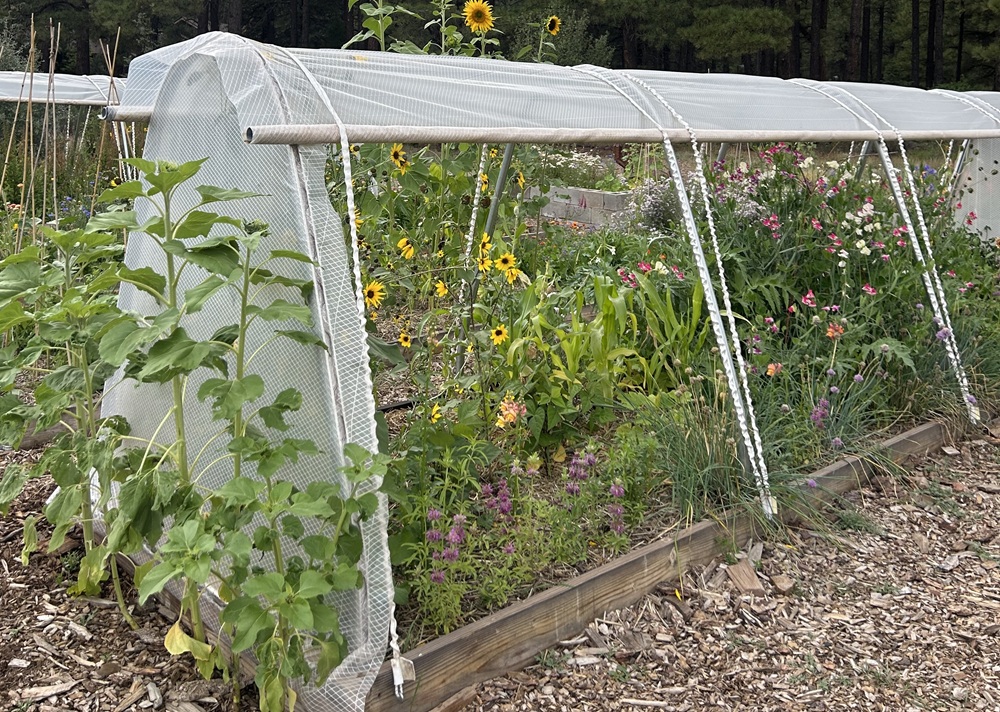
At this point you may be wondering, what exactly is a MiniTunnel? Designed and built by the Flagstaff locals behind Steady Harvest, these MiniTunnels are durable roll up raised bed coverings. Made of galvanized steel tubing and 10mil Americover SolaScrim reinforced polyethylene covering that comes with a 4-year warranty, these structures are built to withstand whatever crazy Flagstaff weather occurs. If you have lived here long enough, you know anything can happen and that is exactly why these MiniTunnels are so great. The easy hand crank makes it simple to adjust and adapt to various conditions, which inevitably extends your growing season and protects your plants year-round.
Needless to say, I was extremely excited to get two of these at the Arboretums vegetable garden to help with our nighttime lows.
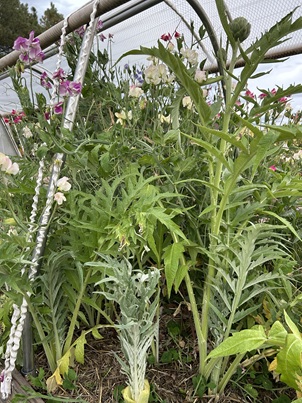
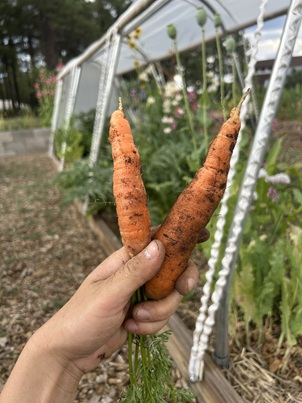
Our first MiniTunnel was installed in April and was planted in early May with sweet peas, artichokes, cardoons, poppies, snapdragons, carrots, radishes and leafy greens. Any experienced gardener may notice the theme between all of these plants being “cold tolerant”.
Usually planting anything in early May at the Arboretum is a fool’s task but with these new season extenders, I couldn’t resist!
The results? The most beautiful bounty of sweet pea flowers that one could smell from 20 feet away, an abundance of carrots and radishes that rarely ever made it outside of the garden boundary (an excellent weeding snack), and my first opportunity to make fried cardoons like my grandmother. Not to mention the poppies whose beauty stopped me in my tracks on multiple occasions and delicious fresh salad greens that somehow the rabbits never found.
The second MiniTunnel was installed in May through a community workshop to show people how easy it is to build one from a DIY kit that Steady Harvest sells.
This tunnel was packed with tomatoes, basil, zinnias, motherwort, and calendula that took off immediately after planting and didn’t stop until October.
Enough romantic garden talk, let’s get down to how these things function.
With the SolaScrim siding that easily rolls up and down via a hand crank, one has about 4 degrees of warmth. Meaning, if the low is 30 degrees, it will be 34 degrees in the MiniTunnel if you roll down the sides.
While that 4 degrees can go a long way, I found it easy to make it even warmer by utilizing walls of water and frost cloth on the particularly cold nights which enabled us to get our cold sensitive crops in earlier, leading to a superb, long-lasting tomato season.
Perhaps the greatest thing about these structures is the constant overhead protection they provide from not only leaf shredding hail, but the intense high elevation sun. Simply providing slight shade during the peak daytime hours enables the plants to grow faster and happier.
Admittedly, I was nervous about the overhead coverage depriving the crops from receiving rain, but due to the design, if I had the sides rolled up to the highest degree, about two thirds of the bed was soaked post rainfall. With this design, you really get the best of all worlds!
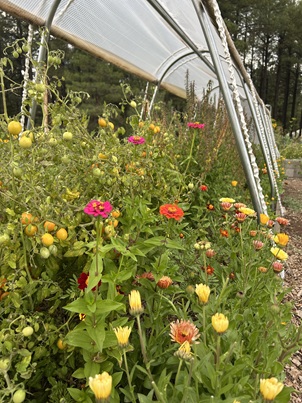

This year, on July 24th and August 4th , our vegetable garden froze. While I was sad to see the frozen corn, beans, squash, zinnias and dahlias that were in the beds outside of the MiniTunnels, I immediately noticed that all of the tender plants within the MiniTunnels were unfazed by the freezing temperatures, even though I didn’t roll down the sides. The overhead protection was able to trap enough warm air to save crops from the cruel midsummer freeze.
After having these MiniTunnels for a growing season, I truly can’t recommend them enough. Not only is working with this local business easy and fun, add growing food successfully in Flagstaff to the list! Utilizing season extenders is essential in Flagstaff and having these easy-to-use extenders makes growing plants in this finicky climate a breeze. For more information about how to get one of these in your backyard visit: https://hightunnelgreenhouses.net.
Gina Goegan is the Greenhouse Manager at The Arboretum