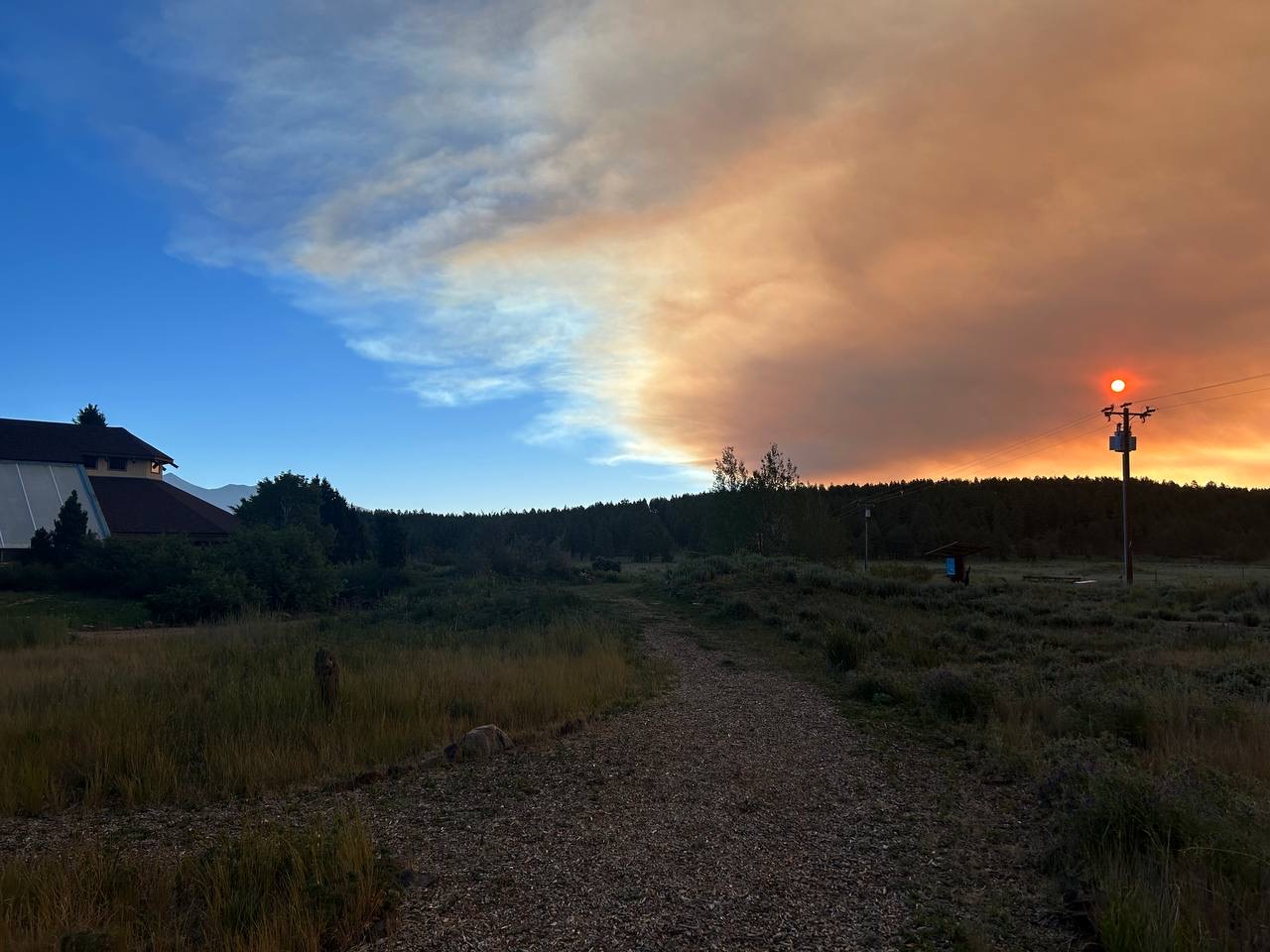
Goodding’s Onion (Allium gooddingii) is a perennial wild onion with large reddish-purple flowers and a strong onion-fragrance. Goodding’s Onion is known from Arizona and New Mexico, and occurs on multiple National Forests associated with perennial, intermittent and ephemeral streams in mixed-conifer and spruce-fir zones at elevations ranging from 7,000-9,400 feet. Natureserve ranks this species as G2 Imperiled, meaning it has a high risk of extinction. Over 90% of its habitat has burned in the past few decades and total numbers of individuals are much reduced due to these fires, sedimentation, and erosion.
Sometimes wildfire has been known to stimulate germination of certain plant species like Mullien or some Pine trees. We wanted to know if that is the case for Goodding’s Onion. If that is true, then the loss of habitat might be offset by a gain in newly germinated plants.
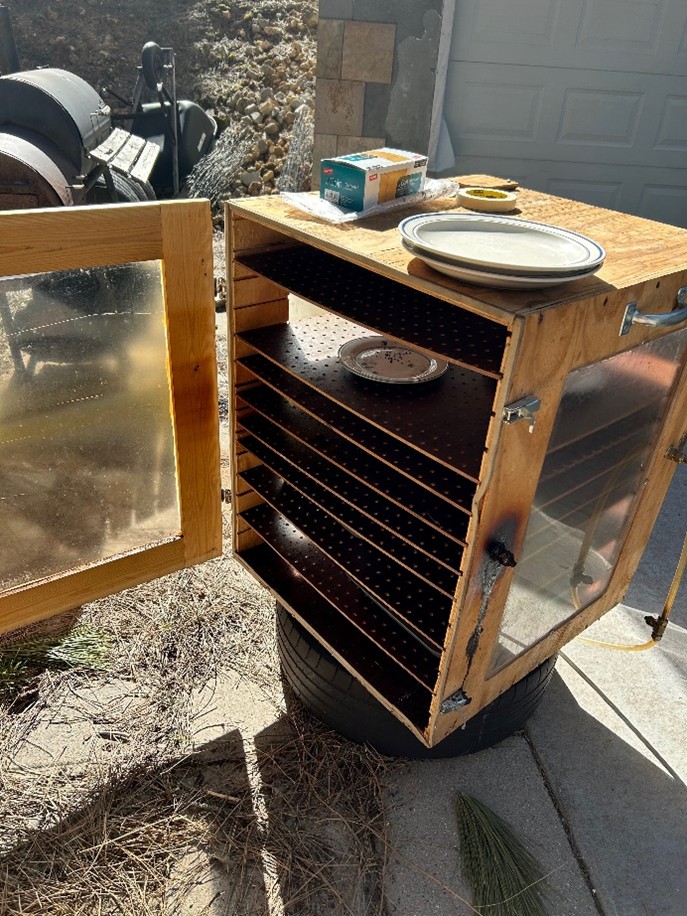
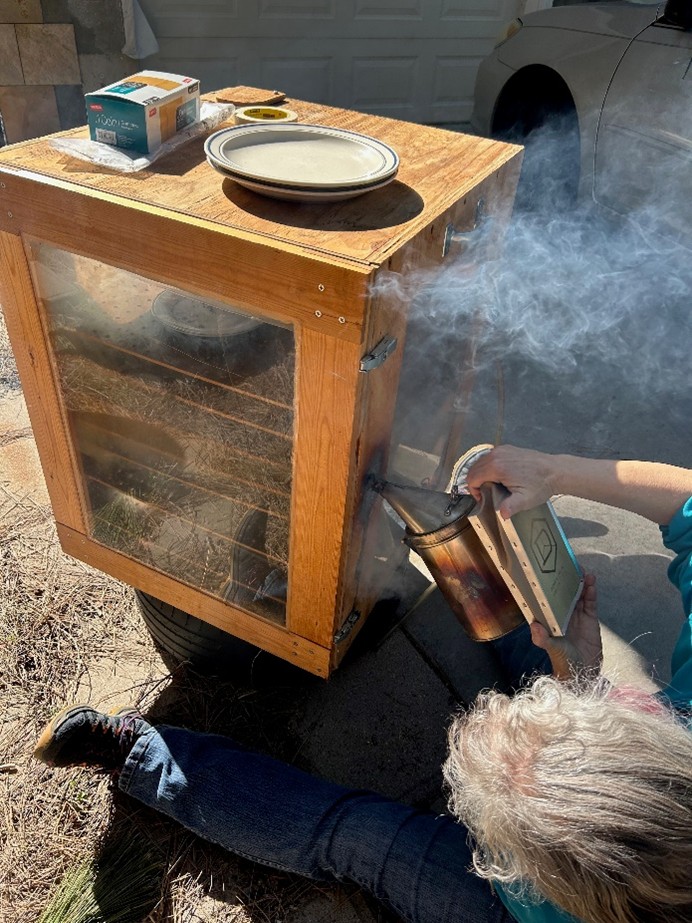
Adding smoke to the smoke-box
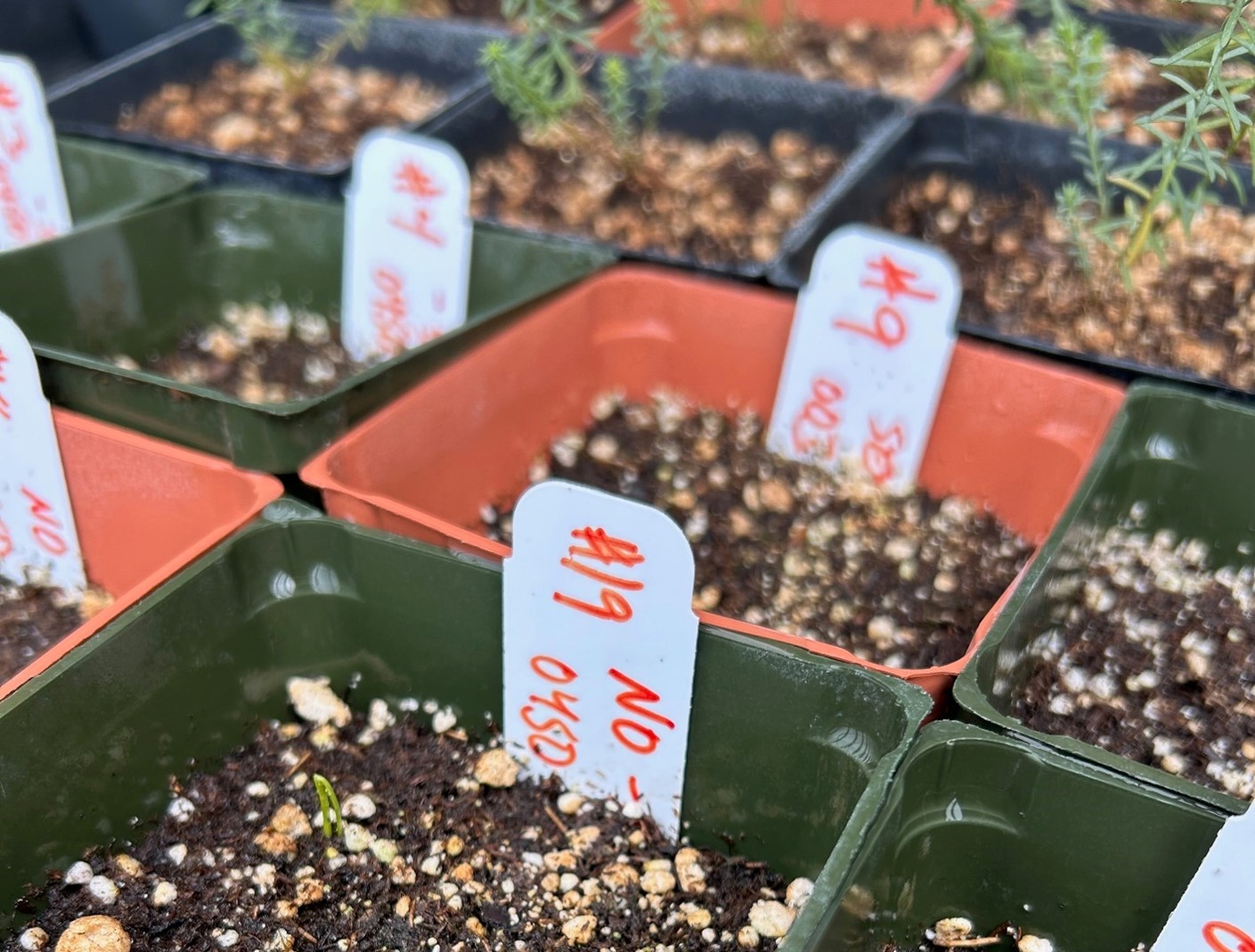
In general, Allium gooddingii germinates fairly easily in the greenhouse. Over the history of working with the species at the Arboretum we have achieved around 40%-88% germination success. We took a small sample of seeds and a small amount of potting soil to Mary Lata of the USDA Rocky Mountain Research Station who has a plexiglass chamber that can be filled with wood smoke which simulates the conditions the seeds and soil might experience during a wildfire.
We found that adding the smoke this way did not show any significant differing germination rates as compared to the control group. In fact, it might suggest that it inhibits germination, because adding smoke to both the seeds and soil had the least successful germination rate of 55%, but our sample size was low so we cannot statistically show this. What this tells us is that there is not likely a benefit, but more likely a detriment, which is not great news considering wildfires are increasing in size and severity.
Sheila C. Murray is the Conservation Botanist at The Arboretum at Flagstaff.