Summer is a great time for road tripping. If you have a favorite trip that you’ve taken on more than one occasion, then there is probably that one gas station you always have to stop at. Maybe the gas is cheapest, they have your favorite snack, or most probable…the bathroom is reliably CLEAN! Either way, it’s your non-negotiable stop to rest before continuing that long venture.
You can think of The Arboretum, and Flagstaff in general, as a “migration station”. We are so fortunate to be situated along the migration paths of many bird species as they fly back and forth from north to south as the seasons change. Our high elevation forests and marshy, mountain wetlands (especially after a good monsoon) are a great resting stop for our migratory birds. They provide cooler temperatures, food, water, and shade – all vital for a rest stop before re-entering hot desert climates.
There are two peak bird migration windows in Flagstaff – spring and fall. Spring migration can start as early as March, but its peak through the area usually occurs early to mid-May. In the fall, early migrators may pass through in August, but its peak through the area occurs in the first half of September. Keep in mind that a lot of factors play into bird migration and with our ever-changing climate, migration peaks may differ and some species may show up earlier or later than they have historically.
For our upcoming fall migration, I recommend checking out this link. This site has great resources for staying up-to-date on bird migration patterns. Under their migration tools tab, you can find a map of the average peak migration periods for different U.S. cities and even a live map that allows you to watch those fluctuations in real time. Cornell Lab of Ornithology’s website also has a lot of resources I use for birding, but if you’d like to contribute to their live map data and help track migration patterns, you can download their eBird app on any phone or tablet. This app allows you to record your bird sightings as well as utilize their live maps. So not only is it fun to keep track of what you see, but you can also aid bird researchers in tracking migration and seeing how those patterns change over time depending on environmental circumstances.
Here are some species you are likely to find at The Arb:
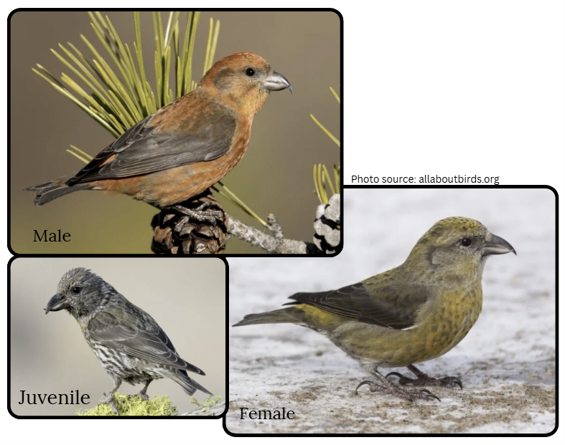
Red Crossbill
Their crisscrossing bills are a dead giveaway. Males are orange to red in color whilst females are a muddy yellow. Juveniles are mostly brown with streaking more visible across the breast and belly. These are a special treat to see in our area as they migrate through. You’ll generally hear them before you see them as they prefer to keep their distance – usually near the tops of our conifers. Their specialized bill allows them to break into unopened pinecones, which are their main source of food – so much so that they also feed them to their young.
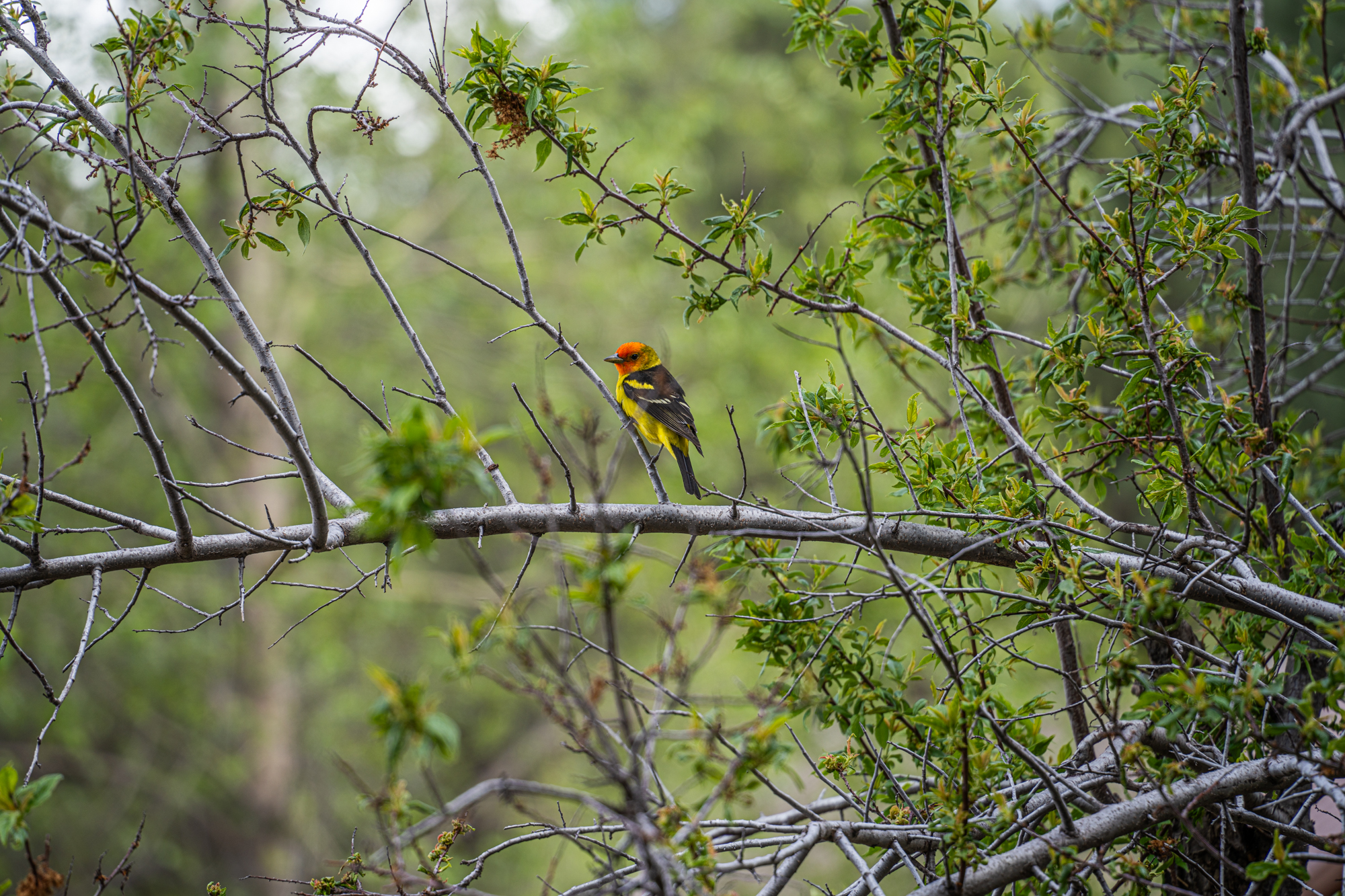
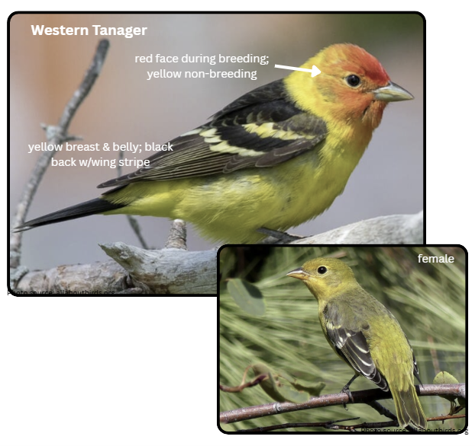
Western Tanager
These migrators are a fan favorite with their vibrant colors standing out against the forest backdrop. They are easy to spot with their bright yellow bodies. During breeding, which is generally the only time you’ll find Western Tanagers in Flagstaff, males will develop a bright red face. Females range from dull to bright yellow and lack the black wings that males have. They like to spend their time near the tops of conifers in open forests.
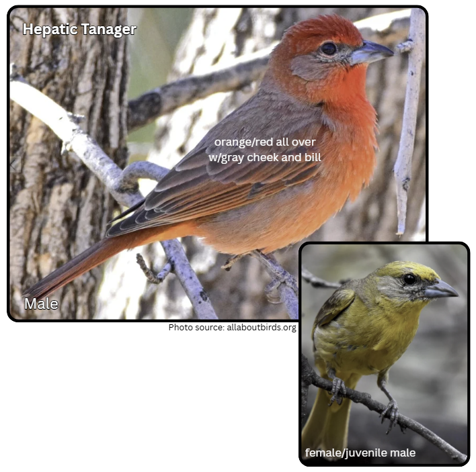
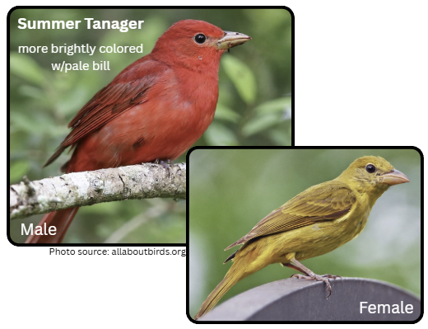
Hepatic Tanager vs Summer Tanager
These bright red males and yellow females are always exciting to see up here in Northern Arizona. These two species differ from our Western Tanagers by lacking those black wings and are fairly monocolored. Although you’re likely to see more Hepatics in the Flagstaff region, we’ve occasionally seen Summer Tanagers passing through. They look very similar so there are a few small ways you can tell these two species apart. Hepatic Tanagers are not as vividly red (in males) and have a gray cheek patch and bill, whereas Summer Tanagers have pale bills and are bright red (in males).
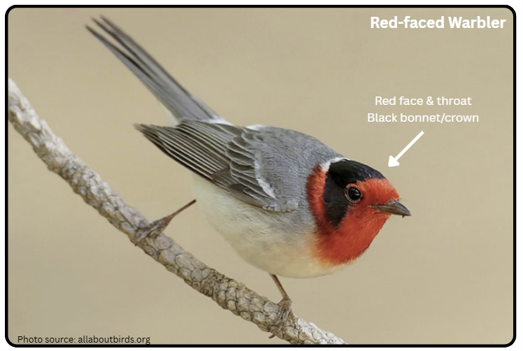
Red-faced Warbler
Flagstaff is right at the northmost end of this little warbler’s migratory journey. They spend most of their time in Mexico, but come north to breed and this is the only period of time you’ll find them in the United States. They prefer mature conifer forests and you can find them by scanning midway up the Ponderosas. They’re easy to spot with their red faces and black bonnet. As they forage for insects in the trees, they’ll flick their tails open to scare bugs into movement.
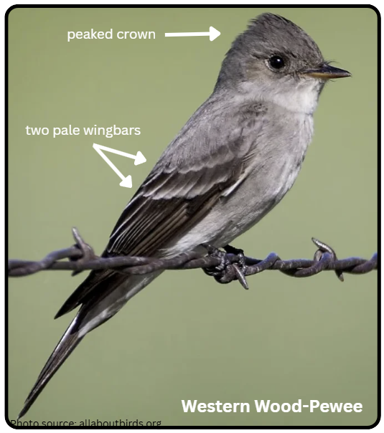
Western Wood-Pewee
This little bird is part of the flycatcher family, which is notorious for having multiple species that look almost identical to each other. It takes a well-experienced and trained eye to be able to distinguish them apart, but if you’ve been out to The Arb or surrounding forests in spring or summer, you have most likely heard their call. Their call is a burry and nasal, descending “peer”. These birds are often seen perching upright in branches or showing off some fantastic moves as they flip through the air catching insects. Some physical characteristics to look for are the typical flycatcher peaked crown, giving their head a somewhat triangular shape, and those two pale wingbars.
Good luck and happy birding!
Sylvia Coppers is the Naturalist and Visitor Services Manager at The Arboretum at Flagstaff.