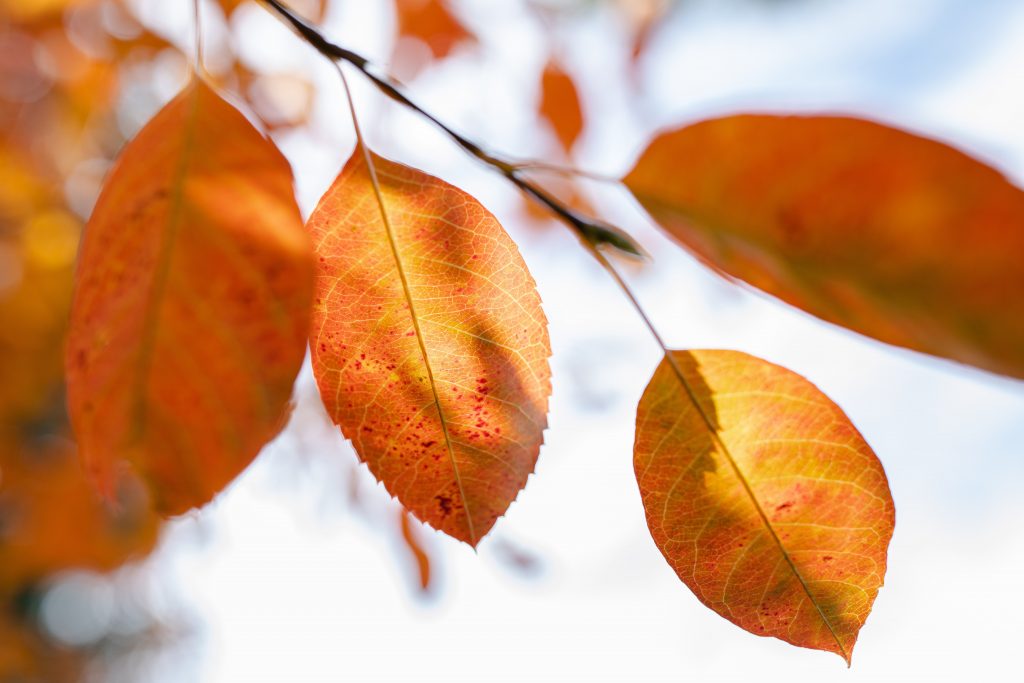
‘Autumn brilliance’ serviceberry is a great ‘fallscaping’ plant as its leaves turn a brilliant orangey-red! (photo credit: April O’Meara)
This article first appeared in the September 24th Arizona Daily Sun.
Tuesday, September 22nd, was the autumn equinox and the official first day of fall. The equinox is a special time as day and night, warmth and cold come into balance before the light gives way to the darkening days that take hold for the remainder of the year.
The start of fall feels like a “second spring” as several plants come into bloom while many shrubs and trees brighten our gardens in hues of red, orange, russet and gold one last time before winter.
But exactly why do leaves change color? The short answer is we are witnessing the fading of chlorophyll – the green pigment that allows plants to turn sunlight into life-sustaining energy. As the days shorten and temperatures drop, plants respond by ceasing photosynthesis to prepare for winter dormancy. The chlorophyll breaks down, exposing other color pigments that are actually always present in the leaf but are concealed by the green. This process reveals the earthy tones of yellows, oranges, and browns while other complex chemical reactions produce the reds and purples. At the same time, specialized cells begin severing the tissues that connect the leaf stem to the branch. This causes the leaf to fall and gardeners reach for their rakes!
If you would like to add some “fallscaping” to your garden, here are some of my favorite fall bloomers and leaf-color show stoppers for you to consider in your design.
‘Goldstrum’ blacked eyed Susan (Rudbeckia fulgida ‘Goldsturm’) first comes into bloom with their cheery golden flowers right when early summer perennials are starting to fade. They then team up with other end-of-season bloomers like asters, autumn joy sedum, and echinacea to create a final blast of color. As their flower petals drop in October, black cone-shaped seed heads add to the feeling of Halloween by creating a subtle spookiness in the garden. This doesn’t last long as gold finches and other song birds soon devour the seeds. It’s a real joy to grab a cup of tea and sit quietly in the garden watching these agile creatures work meticulously at removing each tiny seed.
For a must-try aster, look for the cultivar ‘Alert’ (Aster novi-belgii ‘Alert’), as it sets the autumn garden ablaze with its stunning crimson-purple flowers while providing the last round of fresh nectar for honey bees and other pollinators. Unlike other asters that grow several feet tall, ‘Alert’ was bred for compact growth making it an ideal choice for tucking into small gardens.
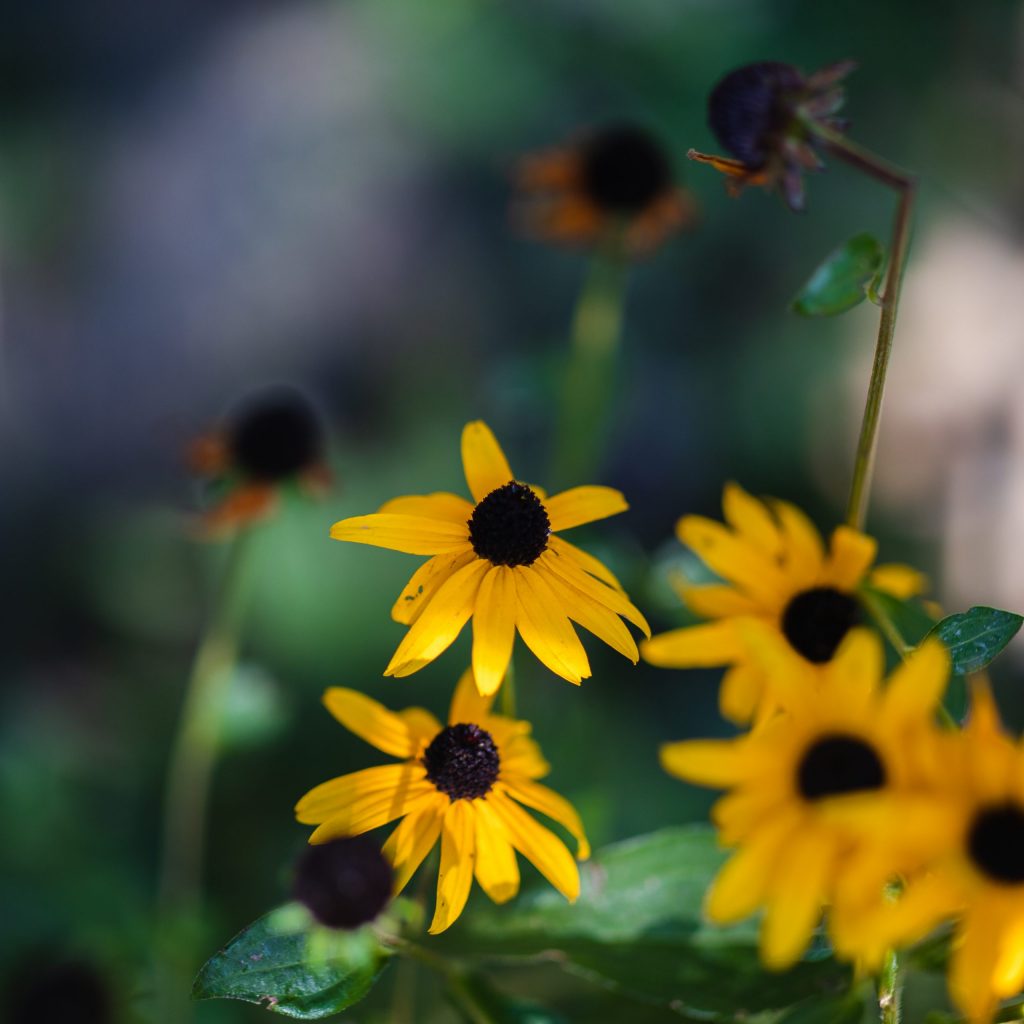
Flowers and seed heads of black eyed Susan add interest to the autumn garden (photo credit: April O’Meara)
For a tough and hardy native that provides late-blooming golden yellow flowers, try rabbit brush (Chrysothamnus spp.) in your garden. Their flowers also attract butterflies and other insect pollinators while the shrub creates shelter for birds and small animals. Other native species that will add to your “fallscaping” include golden currants (Ribes aureum), with their red-to-yellow foliage set against purple-to-orange edible fruit, and smooth sumac (Rhus glabra), whose suckers freely form groves of plants that turn scarlet in fall.
Another one of my favorite leaf changers includes ‘autumn brilliance’ serviceberry (Amelanchier x grandiflora ‘Autumn Brilliance’), a cultivar of native species whose finely toothed blue-green leaves turn a brilliant orangey-red. This is before you (and the birds) enjoy the delicious blueberry-like purple berries. ‘Autumn brilliance’ can be grown as a large shrub or a small multi-stemmed tree.
An additional tree you may want to try includes mountain ash (Sorbus aucuparia), whose thin textured green leaves turn red, yellow, or purple in fall and are beautiful against crimson fruit that persists through winter. ‘Autumn blaze’ maple (Acer x freemanii ‘Jeffersred’) offers a more formal look to your garden and, with its fast growth rate, will add excellent red autumn color in a short time.
Finally, I have to include our native quaking aspen (Populus tremuloides) to the list. Although they can be challenging in a home garden due to their short life span, susceptibility to diseases and insects, and suckers that grow into beds and turf grass, they offer the quintessential northern Arizona fall color. Their leaves changing color is bittersweet: their golden color is beautiful and signals this wonderful time of year, yet I will miss the sound of their rustling in the wind during the darker days of winter to come. Happy fall!
Nate O’Meara is the Executive Director of The Arboretum at Flagstaff.