Each season teaching students at the Arboretum brings opportunities to evolve our lessons and topics simply by observing the landscape around us. Sometimes my interactions with students are shaped by an interesting discovery we observed while walking through the wetlands trail or telling the story of the now quiet robin nest at the Ramada. Other times the landscape around us gives us a much bigger lesson to sit with and try to break down into more understandable pieces.
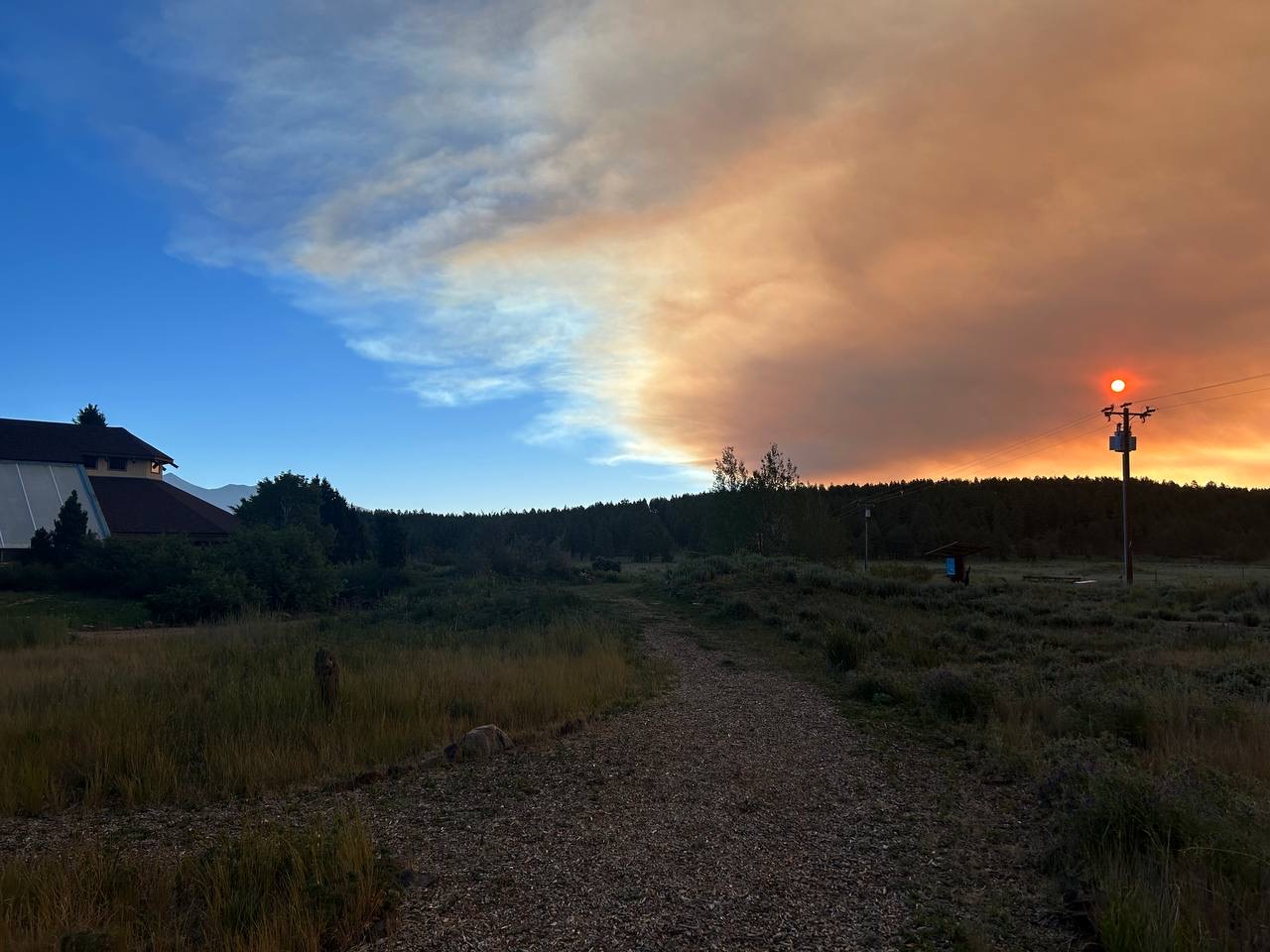
This summer many of us were impacted by the Pocket Fire, including many of the students who come to the Arboretum on their class field trip or with their family for a fun day in nature. Several weeks of our summer camp this season were cancelled as the smoke made it unsafe for us to gather outdoors the way we normally do. For many of our campers, this was the first time that fire was not just something they learned about in class or saw from a distance. This was more personal; something they could see, smell and worry about.
When we returned to our programs, we heard some very real questions from children: What happens to the animals? Will the trees grow back? Is the forest going to be okay? Those questions have followed us into our fall field trips, too. Rather than avoiding the subject of fire, we have been finding ways to talk about it openly and age-appropriately. One of the most important things we can do when children are worried about something is help them understand how it works. So this fall, we have been exploring fire not just as something that can be destructive, but as one part of a much larger forest ecosystem.
We brought that idea to life during our Science in the Park activity where we had the opportunity to interact with hundreds of children and adults and bring the story of fire in our forests to life. We started by drawing different types of Ponderosa pine forests, some growing thick and close together, some park-like and open. Kids added other plants and animals before painting a layer of water over the areas with fuel for fires. Then then fun part; we dropped orange and red “fire” onto the fuel and watched the fire move across the page.
What happened next gave us a chance to see how the structure of a forest can influence fire behavior. We observed that in a more open forest with fewer trees and more space between them, the fire tended to stay closer to the ground, moving through grasses and forest litter. But when the trees grew thick together with low-hanging branches, the fire could travel upward and spread into the canopy. Suddenly, something that can feel frightening and unpredictable became something we could observe, experiment with, and talk about. This simple activity then became a way to begin to talk about how some forests have come to grow differently and what we can do to help.
Of course, our watercolor model is a simplified representation of a very complicated process. Real wildfires are influenced by weather, wind, topography, vegetation, fuel moisture, and many other factors. But this activity gave kids a way to begin thinking about an important ecological idea: the way a forest is structured can influence how fire moves through it. And that is where environmental education can make a difference. We don’t want to tell children that fire isn’t scary because it can be. But we also don’t want fear to be the only way children understand fire. Instead, we can give them tools for asking questions and learning how the system works.
Some of my favorite moments this fall have been when students realize that the story doesn’t end when the flames are gone. A burned landscape can look frightening or lifeless at first, but ecosystems can change and recover over time. New plants emerge, nutrients return to the soil, and animals begin to use recovering habitat. The questions shift from simply, “What did the fire destroy?” to “What happens next?”
The Pocket Fire changed our summer, but it has also changed some of the conversations happening on our field trips. It reminded us that environmental education isn’t always about teaching the lesson we planned. Sometimes the most meaningful lessons come from responding to what is happening right outside our doors.
👉 Teachers and parents: If you’d like your students or children to experience the Arboretum this fall or next spring, now is the perfect time to plan your visit. Reach out to Helena.Murray@thearb.org to schedule a field trip!
Helena Murray is the Educational Manager at The Arboretum at Flagstaff.