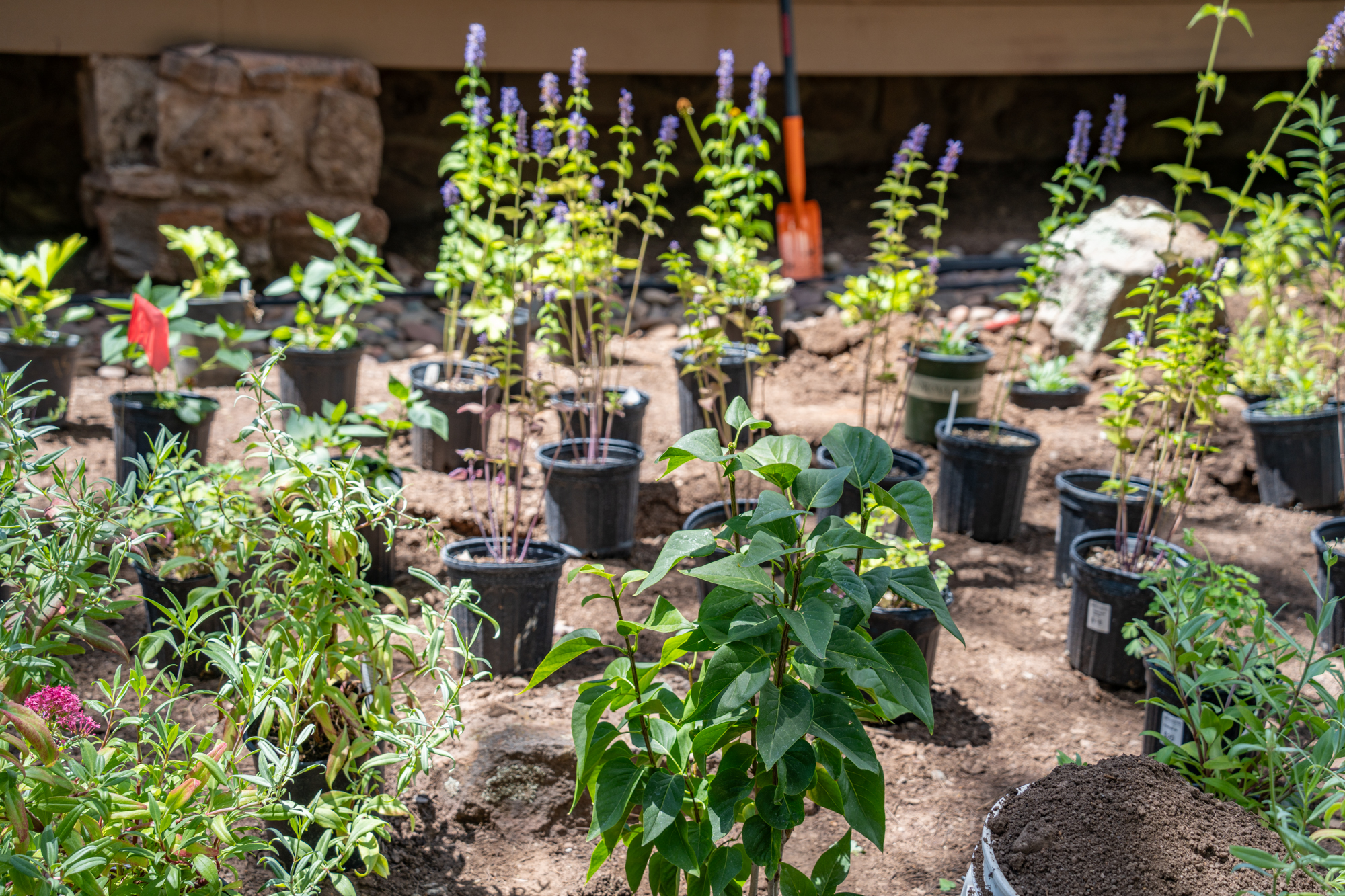
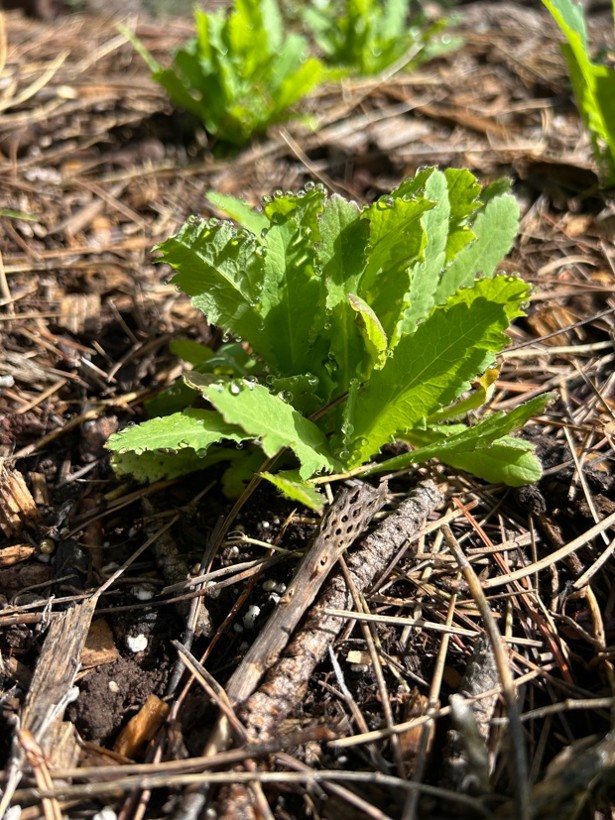
Many thanks to everyone that came out to the Master Gardener Plant Sale last Saturday! It is always a great event, and we love sending our Arb grown plants out into gardens across Flagstaff.
The monsoon forecasts are looking quite promising this year which is very exciting for the gardeners of Northern Arizona. While we can collectively hope for the rains to start sooner than later, the reality is June will likely be a wild ride for new transplants, as it always is in our lovely mountain town. Between heat, freezes and dry high elevation air – it can be hard to keep those tender new plants alive.
It requires some effort and intervention with the elements, but that is why we garden! To interact with our plants and ecosystems. To pay attention to the outside world. To enjoy the fruits of our hard-earned labor! Below are a few tips for getting your transplants through June.
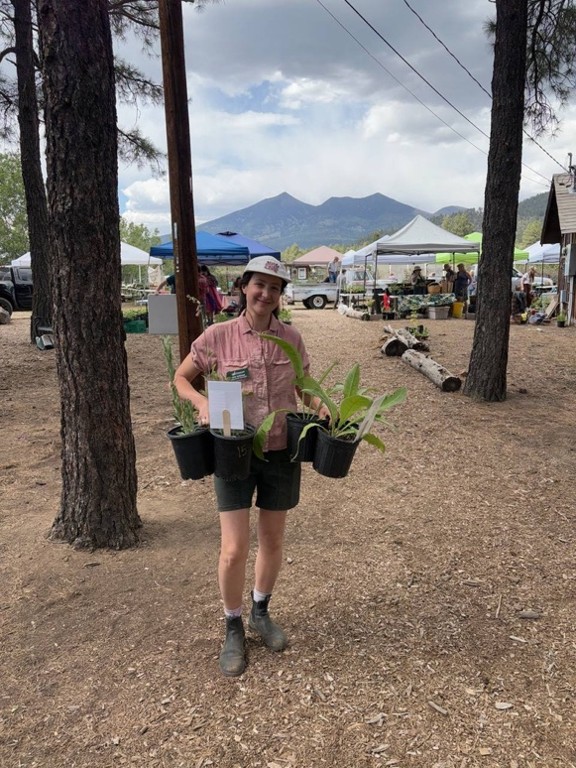
If you picked up some plants from us at the sale, or any other time, please consider returning your pots back to us! Sustaining a plant nursery requires the use of many many many of those one-gallon pots and the more that get returned to us, the more plants we can grow!
Water, Water, Water!
Arguably the most important task in our dry region. In a perfect world, you have some sort of irrigation installed but then again, I am the queen of planting something in an area that doesn’t have any water with the intention to water until it is established. Does it always happen? Nope. It’s okay – be nice to yourself.
The best thing you can do is plant in areas where it is easy to water. The more obstacles in place to water a plant, the less likely you are to do it. An easy-to-access hose and a commitment to keep those plants alive is all one really needs. Just be sure to water in the early morning or the late afternoon. Watering during the peak heat of the day can burn tender plants.
So how much water is enough water? That completely depends on your site, your soil, the weather, and the plants you are watering.
I’m sorry to be so vague but that is the reality of successful gardening. It is up to the gardener to really know their surroundings and the plants they are tending to. If we get a heat wave in June, tender vegetables will need water daily. Native plants can survive a few dry days.
Mulch
Mulch is a great way to help your soil retain water and stay cool. Wood chips, straw, pine needle – there are many options! The key is to have a layer between the blazing sun and your soil to avoid instant evaporation.
Frost/Shade Cloth
My least favorite thing about gardening in Flagstaff is having to use frost cloth. There is just something about it, perhaps it’s the inevitable breeze that kicks in at the exact moment when I am trying to cover the plants. Regardless, sometimes you just have to (especially at The Arb where the low on May 30th was 24 degrees).
If the forecast is calling for potentially freezing temperatures, covering tender plants is a must. You don’t have to use fancy gardening specific frost cloth, sheets work great as well. The only downside to sheets is they are heavier and can squish tall plants, but I generally find they bounce back from that. Bonus points if you have a PVC set up ready to throw a frost cloth or sheet over it.
The other fun element to protect tender transplants from is our fire hot blazing high elevation sun! While many plants love that full sun when established, new transplants might not always be able to handle such heat and they don’t have legs to ‘get out of the kitchen’!
Shade cloth can make a huge difference for a newly planted garden with little tree coverage. This requires a bit more set up but there are many fun creative ways to do it! I’ll leave it to you and the internet to figure out the best way for your yard. Another great option, use nature’s shade cloth and plant some trees! Bonus tip: Walls of water, often seen around young tomato plants are a great way to provide freeze and sun protection. If you don’t know what I am talking about, there’s another internet rabbit hole for you.
There you have it, folks! Keep those plants watered and protected from hot and cold when necessary and all should be well.
Gina Goegan is the Greenhouse Manager at The Arboretum