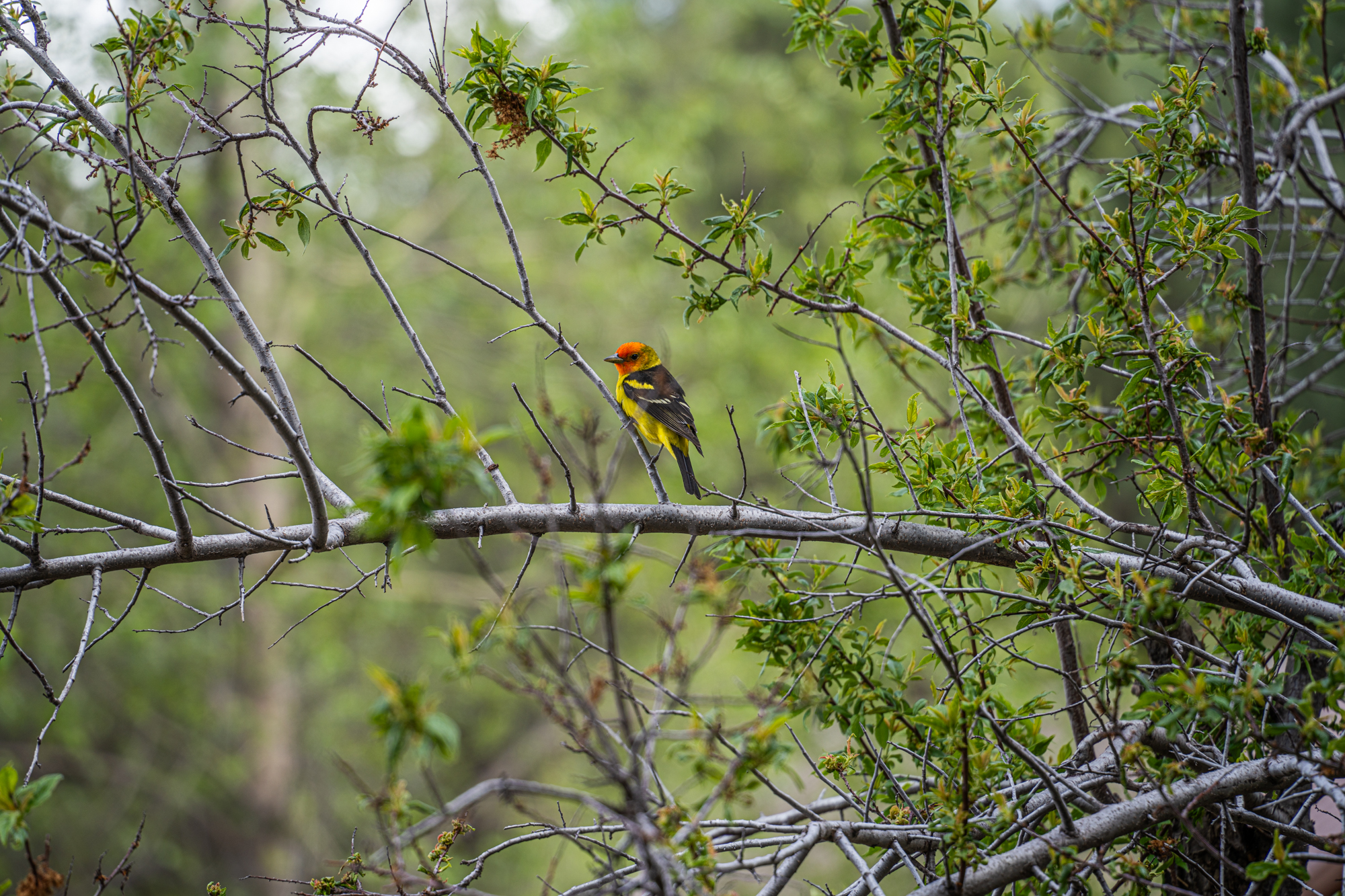

The Arboretum is a great place to go birding, whether you’re an expert or a novice, because Flagstaff is home to over 100 bird species, but over 100 migrating species have been sighted in the area as well. This makes our area a birder’s paradise for seeing rarer species such as the Red-faced Warbler spotted just this past week, which only comes up this far north to breed and then heads right back down to Central America!
Below are some birds to look out for over the next few months. We will go over how to identify them by their physical characteristics as well as some behavioral clues.
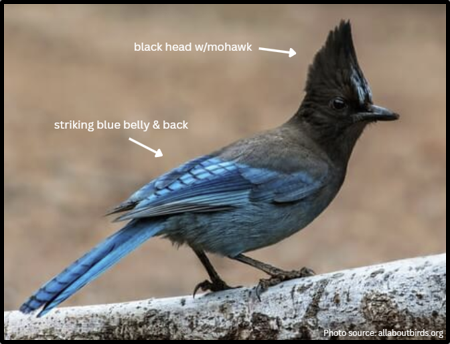
Steller’s Jay
These birds are always a crowd-pleaser due to their vivid blue plumage and spunky black mohawk. They are year-round residents of the Flagstaff area and are often found squawking up in the tall pines or hopping along the forest floor looking for a tasty treat. Being in the same family as crows and ravens (Corvidae), they are highly intelligent and great at mimicking. Here at The Arb, they have been known to mimic red-tailed hawks quite often.
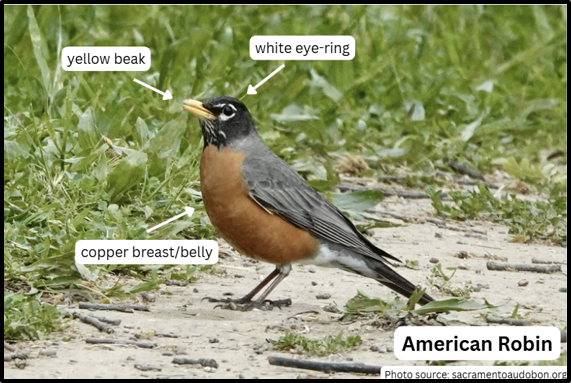
American Robin
These birds are plentiful and full-time residents of The Arboretum – nesting on our buildings and nearby shrubs. They are mostly gray with a copper breast and belly. Other great identifiers are their yellow beaks and white eye-rings. These birds will often be seen scurrying around on the ground picking up bugs and nesting material – scratching away dirt and pine needles with their toes the way that a chicken would.
Nuthatches
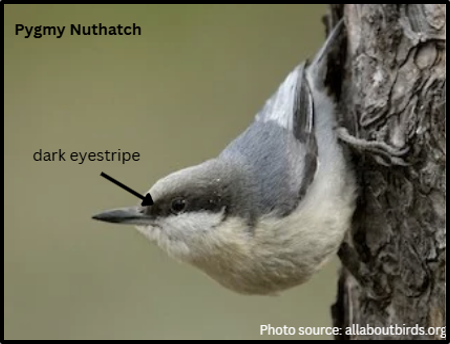
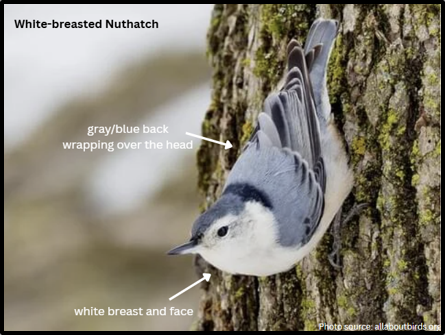
In the Flagstaff region, we have both the Pygmy Nuthatch and the White-breasted Nuthatch. The Pygmy, as per its namesake, is tiny and duller in color with a dark eyestripe. The White-breasted Nuthatch is larger and, as per its namesake, has a white breast, belly, and face with a gray-blue back and head cap. Nuthatches are unique in their ability to cling to the bark of tree trunks and climb with their head facing the ground. They are also notorious for nesting in cavities in standing dead trees, also called “snags”.
Hummingbirds
There are quite a few hummingbird species that migrate through the Flagstaff area in the summer. Most commonly seen are the Broad-tailed Hummingbird, Black-chinned Hummingbird, and Rufous Hummingbird. Mature male hummingbirds are easier to identify over juvenile males and females as they are more vividly colored so we will focus on their identifying characteristics. Females and juveniles can still be identified, but it just becomes a little more challenging.
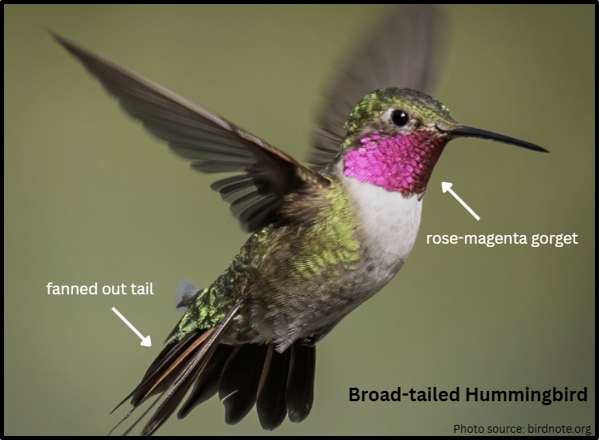

The Broad-tailed Hummingbird has a broad tail that it will fan out as it’s flitting about. It boasts metallic green plumage with a rose-magenta throat patch, also known as a gorget. It’s the classic image that comes to mind when you think of the term “hummingbird”.
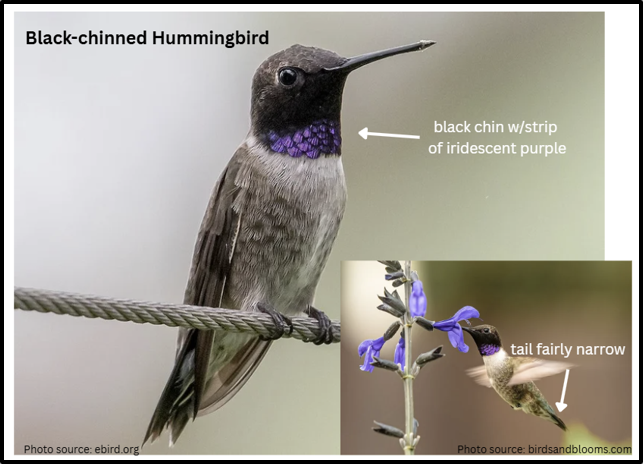
The Black-chinned Hummingbird is usually the first hummingbird to show up in mid-late spring. They are identifiable by their dark chin that is lined by an iridescent purple. Unlike the Broad-tailed Hummingbird, the tail of the Black-chinned Hummingbird is fairly narrow when in flight. Its green plumage may also be slightly less vibrant.
The Rufous Hummingbird is a little firecracker in color and spirit. These little guys are easily identifiable by their fiery, copper plumage and bright orange/copper gorget. They are well-known for being aggressively territorial towards other hummingbirds. Whereas you will often see Black-chinned Hummingbirds and Broad-tailed Hummingbirds sitting together at the same feeder, Rufous Hummingbirds will chase off every other bird (and sometimes even chipmunks). Rufous Hummingbirds make one of the longest migratory journeys of any bird in the world, compared to its body size. It breeds up in Alaska, farther north than any other hummingbird species, and makes its way down to southern Central America and even as far east as Florida!
Welcome to the wonderful world of birds! Good luck and happy birding!
Sylvia Coppers is the Naturalist and Visitor Services Manager at The Arboretum at Flagstaff.